
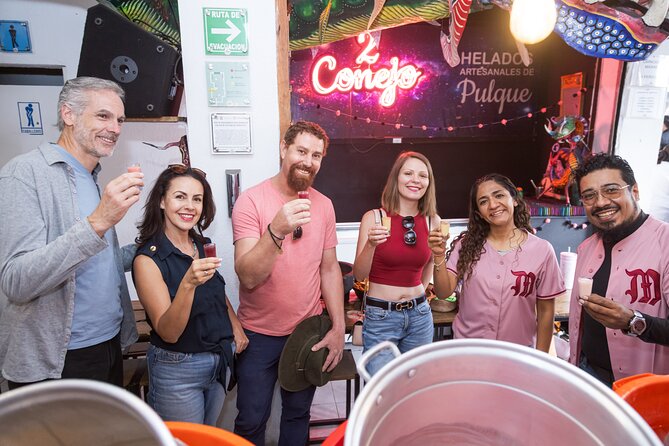
Reviewed · MEZCAL TOURS AND TASTINGS
Mezcal and Pulque Tasting Los Hijos del Agave
Mexico City’s agave drinks tell two very different stories. Pulque is fresh, soft, and often flavored, while mezcal brings smoke, earth, fruit, and the character of the agave itself. This small-group evening links both in neighborhood spots rather than treating them like museum pieces.
I like the tasting structure: you sample several pulques before choosing a full glass, then move on to three mezcals made in different regions and ways. I also like the personal touch of guides such as Juan Carlos, whose storytelling covers both the drinks and Mexico City itself. The main consideration is that the tour involves alcohol, walking, and a stop in a local pulquería, so it may feel less polished than a formal tasting room.
Key points to know
- Fresh pulque at Pulqueria La Canica: Sample several flavors, then order a full glass of your favorite.
- Three regional mezcals at Dos Cuerpos: Compare drinks made from agave grown in different parts of Mexico and produced through different distillation methods.
- Juan Carlos may lead the tour: He is praised for his stories, easygoing manner, and ability to explain Mexican culture alongside the drinks.
- A short neighborhood walk connects the stops: The route begins in Tabacalera and finishes near Emilio Dondé in Centro.
- Small groups keep the tasting personal: The maximum group size is 10 people.
- Allow two to three hours: This is a relaxed evening tasting, not a quick flight of samples.
Why Pulque and Mezcal Belong on the Same Evening
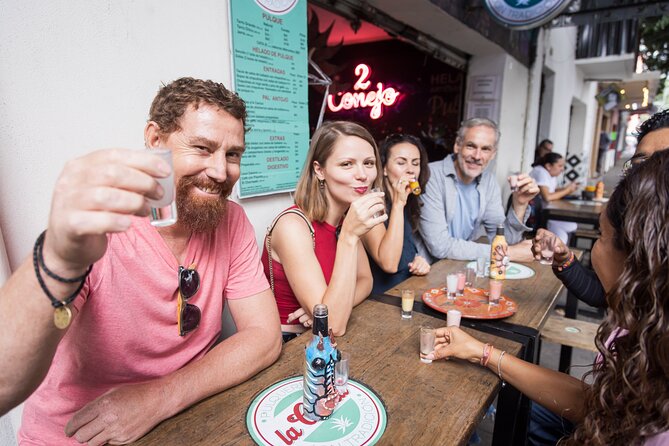
Pulque and mezcal both come from the agave plant, but they are not the same drink. Pulque is made from agave sap and is served fresh. Mezcal is distilled, which gives it a very different body and aroma.
That contrast makes the order of this tour work well. You begin with pulque at a neighborhood pulquería, then move toward distilled agave spirits at Dos Cuerpos. The first stop is casual and social. The second asks you to pay closer attention to how place and production shape the drink.
You do not need to arrive with a trained palate. The point is to learn what to notice: texture, aroma, smoke, sweetness, acidity, and the finish. A good guide can make those details easy to spot without turning the evening into a classroom lecture.
The experience is offered in English, which matters if you want more than a simple pour and a name. Juan Carlos, also referred to as JC, is singled out for his stories about Mexican culture and history. His role seems to be less formal sommelier and more enthusiastic local guide who knows how to keep a group talking.
More Tequila Tastings in Mexico City
- Lucha Libre Tour and Mezcal Tasting in Mexico City
★ 5.0 · 519 reviews - Mexico City: Tequila and Mezcal Museum Tour with Tasting
★ 4.8 · 301 reviews - Xochimilco: Tequila tasting (unlimited) and cultural party on a boat
★ 4.9 · 259 reviews
Starting in Tabacalera at Pulqueria La Canica
The meeting point is Av. de la República 67 in Tabacalera, in the Cuauhtémoc district. The tour begins at Pulqueria La Canica, described as a neighborhood pulquería where the drink is fresh each day.
That detail is important. Pulque is not presented here as a packaged souvenir drink. You are tasting it in the kind of local setting where freshness matters and where the drink remains part of ordinary city life. The atmosphere may be more relaxed and informal than a dedicated cocktail bar, which is part of the appeal.
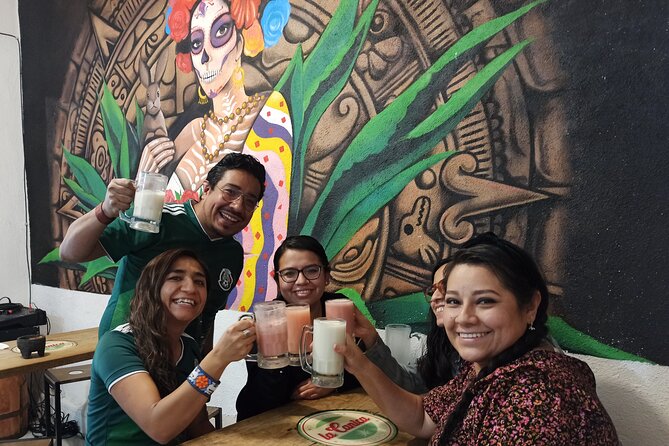
At La Canica, you try several pulque flavors. You then choose the one you prefer and receive a full glass of it. This is a smart format for first-time tasters because pulque can be unfamiliar in both flavor and texture. Instead of committing to a large serving right away, you get a chance to compare first.
The exact flavors are not listed, so you should expect the selection to depend on what is available that day. That is normal for a fresh product, but it also means you should not book this expecting one fixed menu.
Mexican snacks are ordered during this stop. The available information does not say whether snacks are included in the tour price, so I would check that before booking or bring enough money for anything you want to eat. Snacks make practical sense here: pulque is better enjoyed with food, and an evening of tastings is more comfortable when you are not drinking on an empty stomach.
What to Notice in the Pulque Tasting
Pulque has a different feel from mezcal, beer, or a standard mixed drink. The tasting gives you room to compare styles before settling on a favorite, rather than assuming you will like the first glass.
I would pay attention to three things:
- How thick or light the pulque feels
- How the flavoring changes the base drink
- Which version remains pleasant after several sips
The full glass is a nice touch because it turns the tasting into a choice rather than a parade of tiny samples. If you find a flavor you like, you get time to enjoy it properly.
This stop also gives Juan Carlos or another guide a natural opening to explain pulque’s place in Mexican life. The information provided points to the drink’s history and preparation, and the tour’s appeal comes partly from learning how it is made and why it has lasted.
Do not expect a highly scripted presentation. The setting and the tone suggest something more conversational. That suits people who want to ask questions and hear stories, but it may disappoint anyone looking for a technical workshop with exact production charts.
Walking from Tabacalera Toward Centro
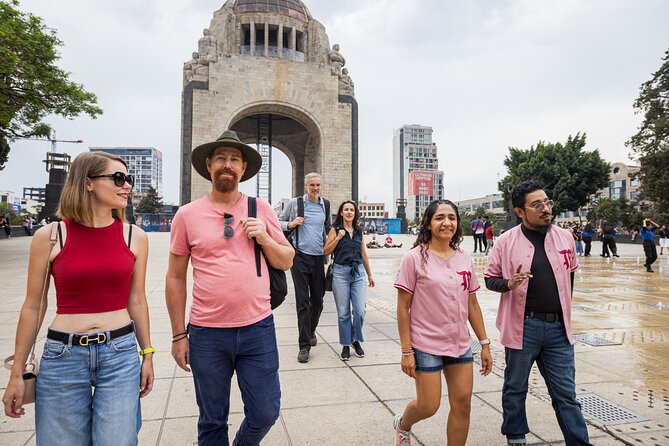
After the pulquería, the group continues toward the mezcal tasting. The end point is on Emilio Dondé in Colonia Centro, near a favored mezcal shop. The route includes a walk through Mexico City neighborhoods, and the walk itself is part of the evening rather than a transfer to ignore.
The tour description does not give the exact distance or walking time between stops, so wear comfortable shoes. Public transportation is nearby, and the meeting and ending points are in central districts, which makes the tour practical if you are already exploring Cuauhtémoc.
The walk adds useful context. You see the city between tastings instead of spending the whole night seated in one room. At the same time, this is not advertised as a major sightseeing walk. The drinks remain the main event, so choose another tour if your priority is a detailed architectural route or a long list of landmarks.
A small group helps here. With a maximum of 10 people, it should be easier to stay together, hear the guide, and ask questions while moving through the neighborhoods. The group size can also affect the feel of the evening. If only a few people book, you may receive a very personal tour. A private evening is possible when no one else has booked, though that cannot be guaranteed.
More Mezcal Tours and Tastings in Mexico:
- Food & Mixology Tour:Tequila,Tacos, Mezcal and Agave Cocktails
★ 5.0 · 1,884 reviews - Hierve el Agua, Tule Tree, Mitla and Mezcal Distillery Tour
★ 4.5 · 1,094 reviews - Lucha Libre Tickets & Tacos & Beer & Mezcal – BEST NIGHT EVER!
★ 5.0 · 1,077 reviews - Explore Hierve el Agua, Mitla, Tule, Textile and Mezcal for a day
★ 5.0 · 1,043 reviews
Comparing Three Mezcals at Dos Cuerpos
The second stop is Dos Cuerpos, where you taste three mezcals from different parts of Mexico. The mezcals also represent different regions and distillation processes, giving you a clear reason to compare them side by side.
This is where the tasting becomes more focused. Rather than treating mezcal as one smoky drink, the guide can show you how much variation exists between bottles. Region, agave type, and production method all affect the result.
The available details do not name the three regions, agave varieties, or distillers. You should therefore think of this as a guided introduction to regional difference, not a fixed collector’s tasting with a published bottle list.
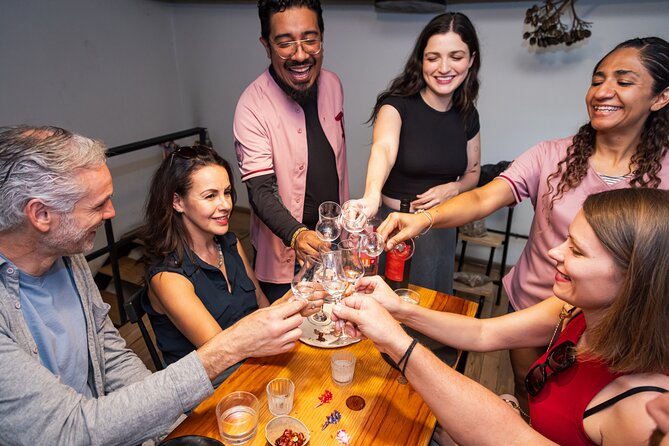
A beautiful old house provides the setting for the mezcal tasting. That setting adds atmosphere, but the useful part is the chance to taste slowly and ask why each mezcal differs. If you are new to the category, listen for a simple explanation of what comes from the agave, what comes from cooking, and what comes from distillation.
You may find that one mezcal tastes smoky, another more herbal or fruity, and another more earthy. Those are broad possibilities rather than promised tasting notes, so let the guide lead you through what is actually in the glass that evening.
Learning How to Taste Without Overthinking It
A good agave tasting should help you become more curious, not make you feel tested. I like that this tour combines several pulques with three mezcals because the comparisons are built into the evening.
Start with the aroma. Swirl the glass gently if appropriate, bring it near your nose, and take a small sip. Notice what changes after the drink sits on your tongue. You do not need fancy language. Words such as light, sharp, creamy, smoky, sweet, dry, or earthy are enough.
The guide can also explain preparation methods. The mezcals are selected from different regions and distillation processes, so the lesson is not only about taste. It is about how a drink reaches the glass.
This is especially useful if you have only tried mezcal in a cocktail. A neat tasting shows you more of the spirit itself. It also gives you a better basis for deciding what to order later in Mexico City or what bottle to take home.
The pulque stop works as a useful counterpoint. It reminds you that agave drinks are not all distilled spirits and that freshness, flavoring, and texture can matter as much as alcohol strength.
The Guide Makes the Difference
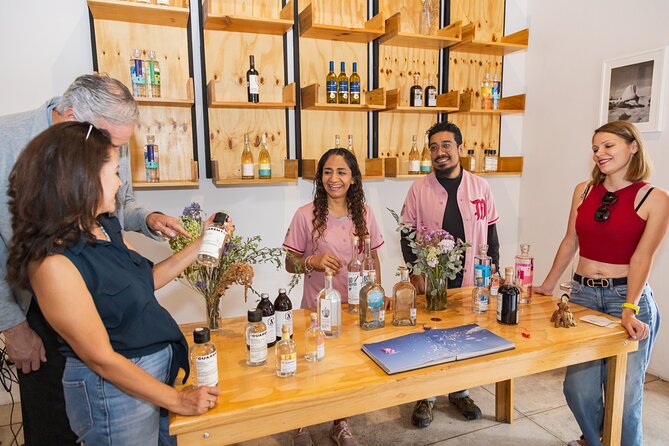
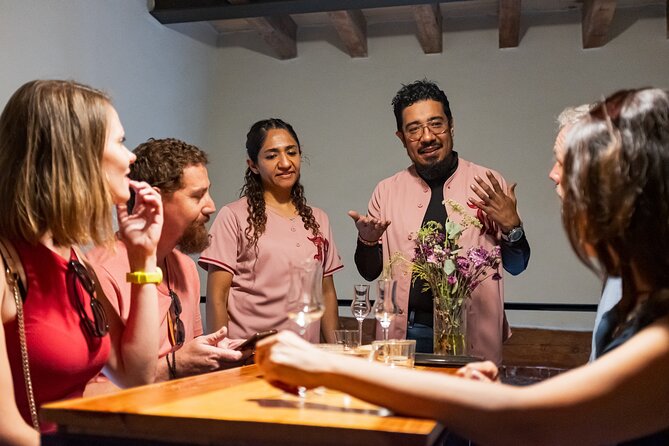
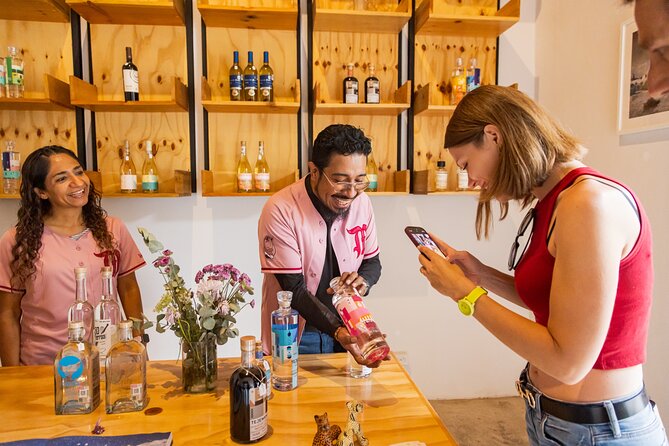
Juan Carlos is the guide name most closely tied to this experience. JC is described as an excellent storyteller with a strong grasp of Mexican culture and history, and as someone who makes the evening feel like time with an old friend.
That description tells you what kind of guiding to expect. The strength is likely to be conversation, warmth, and context rather than a formal lecture. If you enjoy asking why a drink matters, how it is prepared, or how it fits into Mexican life, this format should suit you.
Guide availability can vary, so Juan Carlos may not lead every departure. The tour is offered in English, and the guide is expected to explain both drinks and local culture in that language.
The personal style is also why a small group matters. With 10 people or fewer, a question does not have to compete with a crowd. If the group is especially small, the evening may feel almost like a private outing, but you should treat that as a possibility rather than a promise.
Timing, Group Size, and Practical Value
The total duration is about two to three hours. That gives enough time for both stops and the walk between them without turning the evening into a full-day commitment.
The maximum group size is 10. I consider that a good fit for a tasting because large groups can make it hard to hear explanations or share a table comfortably. The tour is also near public transportation, which helps when you are getting to Tabacalera or leaving Centro afterward.
The exact price is not provided here, so I cannot judge the peso amount directly. To assess value, check what your booking includes. The tasting clearly covers several pulque samples, a full glass of your chosen pulque, and three mezcals. Mexican snacks are ordered at the pulquería, but the available details do not confirm whether they are included.
For many people, the value will come from the guide and the structure, not only the alcohol. Buying three mezcal pours and several pulque samples on your own could be simple, but you would miss the explanations, regional comparisons, and walk linking the stops.
You also get a way to try pulque with guidance. That matters because first impressions can be mixed if you choose an unfamiliar style without knowing what to expect.
Who Should Book This Tasting
I would recommend this tour to you if you want an introduction to Mexican agave drinks with cultural context and a relaxed social pace. It is especially suitable if you enjoy small groups, local bars, neighborhood walking, and conversation with a guide.
It also suits a repeat visitor who has already seen Mexico City’s major sights and wants an evening built around food and drink. The route through Tabacalera and Centro adds a sense of place without pretending to be a full sightseeing tour.
You should think twice if you do not drink alcohol, dislike casual bar settings, or need a tightly scheduled activity with every detail fixed in advance. The fresh pulque selection may change, and the exact mezcal lineup is not specified.
The walk between stops also means this is not a seated tasting from start to finish. Comfortable shoes and a willingness to move through the city will make the evening easier.
Booking Details and Cancellation
You receive confirmation when you book, and free cancellation is available if you cancel at least 24 hours before the start time. Cancellations made within 24 hours are not refunded, and changes inside that window are not accepted.
The meeting point is Av. de la República 67, Tabacalera, Cuauhtémoc. The tour finishes on Emilio Dondé in Colonia Centro, near a mezcal shop. Since the start and end points differ, plan your evening around the final location rather than assuming you will return to Tabacalera.
Most people can participate, and the activity is near public transportation. The information provided does not list specific accessibility features, so contact the operator if you have mobility needs.
Should You Book Mezcal and Pulque Tasting Los Hijos del Agave?
Book it if you want more than a quick mezcal flight. The combination of fresh pulque, three regional mezcals, Mexican snacks, a neighborhood walk, and an English-speaking guide gives the evening a clear sense of place.
The best reason to choose it is the human side. Juan Carlos brings stories and personality, while the small group keeps the tasting open to questions. The main trade-off is that some details, including the exact flavors, mezcal labels, snack cost, and final price, are not fixed in the information provided.
For a casual, culture-focused evening in central Mexico City, this is a strong choice. Go ready to compare, ask questions, and accept that pulque may surprise you.
FAQ
How long does the Mezcal and Pulque Tasting Los Hijos del Agave last?
The experience lasts approximately two to three hours, including the pulque stop, the walk between locations, and the mezcal tasting.
Where does the tour begin?
It begins at Av. de la República 67 in Tabacalera, Cuauhtémoc, Mexico City.
Where does the tour end?
The tour ends on Emilio Dondé in Colonia Centro, Cuauhtémoc, near a mezcal shop.
Is the tour offered in English?
Yes. The experience is offered in English.
How many people can join the tour?
The maximum group size is 10 people.
What drinks are included in the tasting?
You sample several pulque flavors and receive a full glass of the flavor you choose. At Dos Cuerpos, you taste three mezcals from different Mexican regions and distillation processes.
Can I cancel for a full refund?
Yes, if you cancel at least 24 hours before the experience start time. Cancellations made less than 24 hours before the start time are not refunded.
More Tequila Tastings in Mexico
- Cabo Beach Camel Ride, Mexican Buffet and Tequila Tasting
★ 5.0 · 8,815 reviews - Early morning Chichen Itza Tour: Cenote and Tequila Tasting
★ 5.0 · 6,657 reviews - 4×4 ATV Adventure with Tequila Tasting and Mexican Buffet Lunch
★ 5.0 · 5,177 reviews - Cancun ATV Jungle Adventure, Ziplines, Cenote and Tequila Tasting
★ 4.5 · 4,873 reviews
Newest agave reviews around Mexico
- Private Mezcal and Tequila Tasting in Tulum★ 5.0 · 8 reviews
- Xochimilco’s Wild Side: Mezcal, Insects & Culture★ 4.9 · 10 reviews
- Salsa Class,Mezcalita Workshop & Mexican Dinner★ 5.0 · 9 reviews
- Tequila & Mezcal Tasting – Agave Masterclass In San José del Cabo★ 5.0 · 5 reviews
- San Jose del Cabo Tequila, Mezcal and Mixology Class★ 5.0 · 13 reviews
- Cachasol Raicilla and Tequila Tour★ 5.0 · 20 reviews
- Traditional Tequila Tasting Experience with Jorge Cuervo★ 5.0 · 19 reviews
- Culinary Experience +Tequila & drinks tasting by Alma de mexico★ 5.0 · 11 reviews
Mezcal Tours and Tastings, compared.
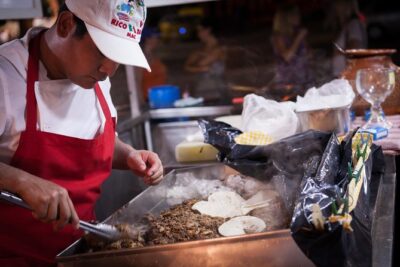
Food & Mixology Tour:Tequila,Tacos, Mezcal and Agave Cocktails
Read our review →
Hierve el Agua, Tule Tree, Mitla and Mezcal Distillery Tour
Read our review →
Lucha Libre Tickets & Tacos & Beer & Mezcal – BEST NIGHT EVER!
Read our review →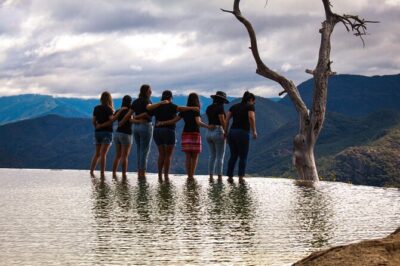
Explore Hierve el Agua, Mitla, Tule, Textile and Mezcal for a day
Read our review →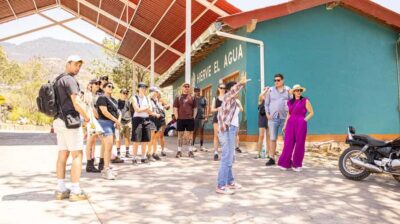
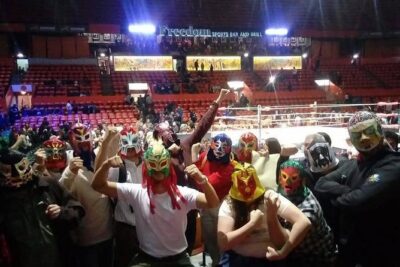
Lucha Libre Tour and Mezcal Tasting in Mexico City
Read our review →
Browse the lists this tour appears in