
Reviewed · MEZCAL TOURS AND TASTINGS
Mexico City: Tequila and Mezcal Museum Tour with Tasting
The most interesting part of this experience is how quickly it turns a familiar bar order into a lesson in Mexican agriculture, history, and craft. Inside the museum, you’ll see more than 2,000 bottles, including unusual designs and bottles containing scorpions, snakes, and the famous mezcal worm.
I like the small group size, limited to five people, because it gives you room to ask questions. I also like the tasting format: one tequila blanco, one reposado, and two wild mezcales let you compare styles instead of simply swallowing a random shot. The main drawback is that the museum itself is small, and the exterior may not impress you at first glance.
Key points to know before you go
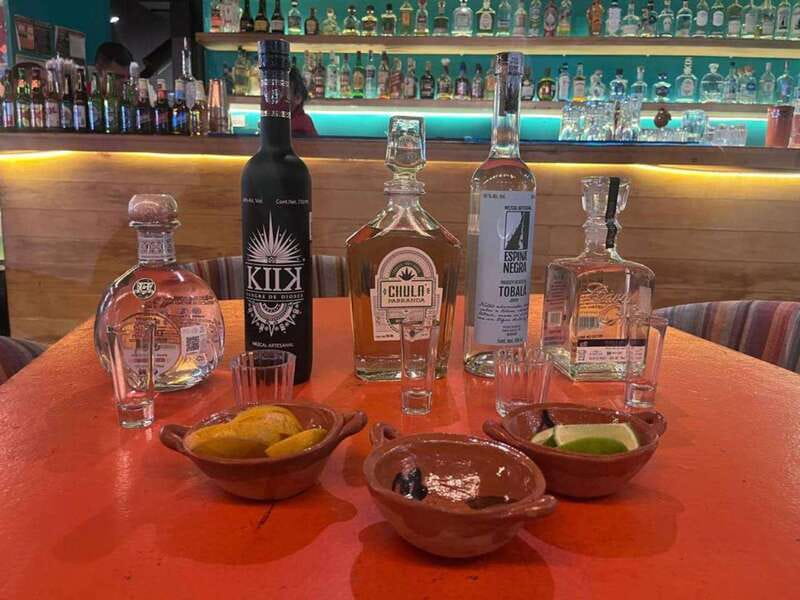
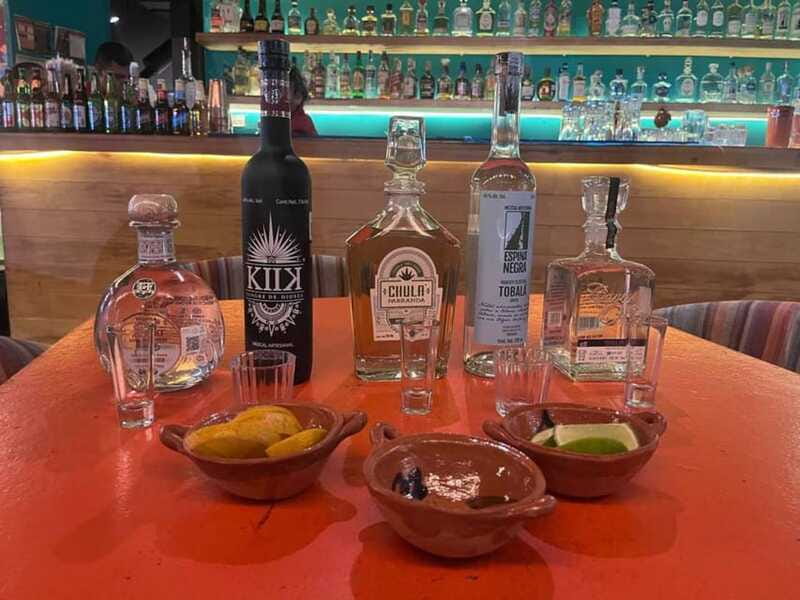
- Four listed tastings: Try one tequila blanco, one reposado, and two wild mezcales while your guide explains how to taste them.
- More than 2,000 bottles: The collection is as much about Mexican popular culture and bottle design as it is about spirits.
- Plaza Garibaldi setting: The museum introduces you to mariachi culture and the plaza’s UNESCO recognition from 2011.
- Bilingual small-group tour: Tours are offered in English or Spanish, with groups limited to five participants.
- Good starting point: You’ll leave with practical guidance for reading labels and choosing tequila or mezcal elsewhere in Mexico.
- Plan your own transport: Transportation, food, and drinks beyond the tasting are not included.
Why this museum makes tequila and mezcal easier to understand
Tequila and mezcal can seem confusing at first. Labels use terms such as blanco and reposado, producers work with different agave plants, and mezcal can vary sharply in flavor. A guided visit gives you a framework before you start ordering drinks around Mexico City.
The tour begins with the agave plant and the way it becomes a spirit. Your guide explains the production process and the differences between tequila and mezcal, rather than treating them as interchangeable shots. That distinction matters. It helps you notice why one drink may taste clean and direct while another carries smoke, earth, fruit, or other flavors.
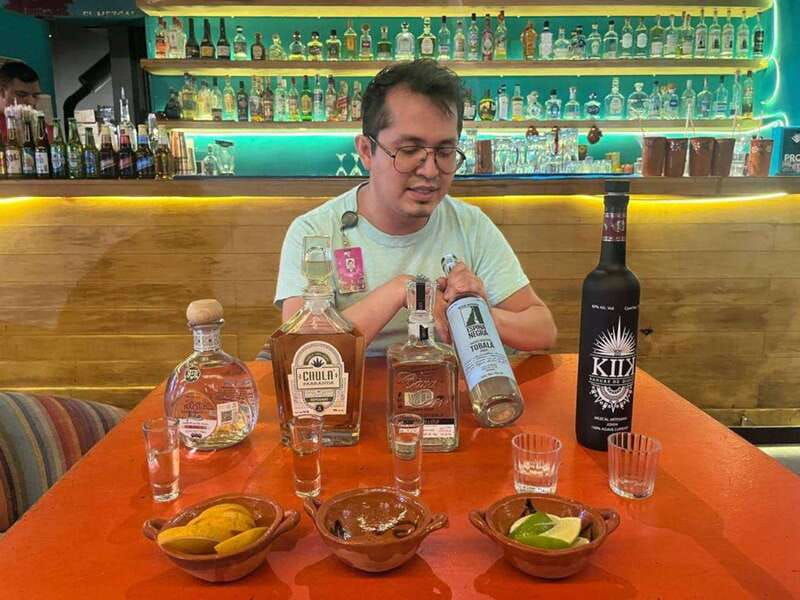
Several guides have led this experience, including Ricardo, Maria, Victor, Jorge, Omar, and Levi. The strongest part of the tour is the guide’s ability to turn technical information into plain advice. Ricardo, in particular, is often praised for explaining the subject clearly, showing visual aids, and answering questions without making beginners feel out of place.
You do not need to arrive as a tequila fan. The format works well for someone who has only had tequila in a mixed drink, as well as for a bartender or spirits enthusiast who wants a clearer look at agave production and labeling.
More Tequila Tastings in Mexico City
- Lucha Libre Tour and Mezcal Tasting in Mexico City
★ 5.0 · 519 reviews - Xochimilco: Tequila tasting (unlimited) and cultural party on a boat
★ 4.9 · 259 reviews - Tequila Tasting (unlimited) and Cultural Party in Xochimilco
★ 5.0 · 61 reviews
Entering the museum in Plaza Garibaldi
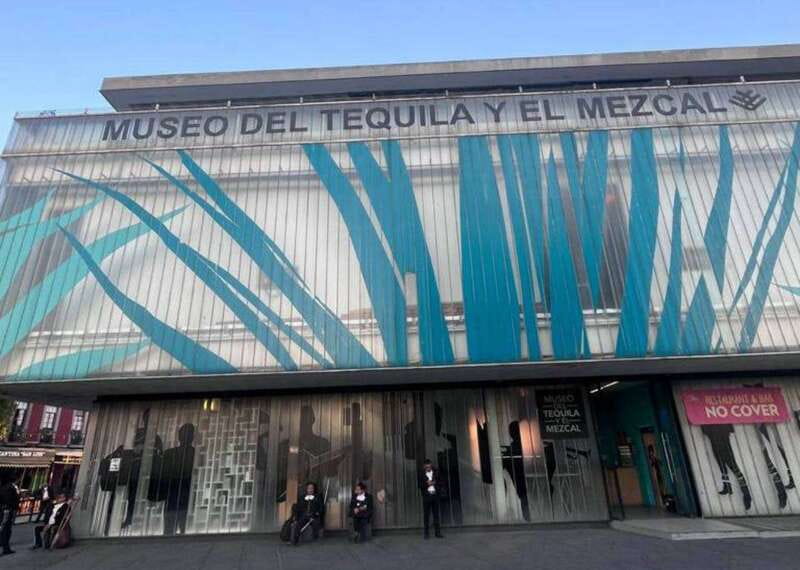
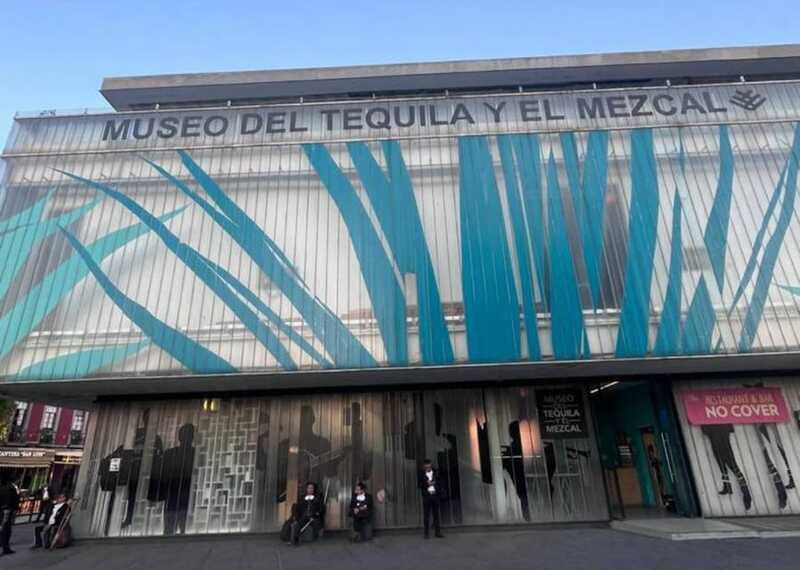
Your meeting point is the Museo del Tequila y Mezcal, where you show your mobile voucher at the front desk. The museum is located in Plaza Garibaldi, one of Mexico City’s best-known mariachi gathering places.
That location adds useful context. Your guide talks about the plaza and about mariachi, which UNESCO declared Intangible Cultural Heritage of Humanity in 2011. The subject is not just alcohol. You are also learning how tequila and mezcal fit into public celebrations, music, restaurants, and Mexican identity.
The setting can feel rough around the edges. Do not expect a grand museum entrance or a large national institution. One practical point worth knowing is that the outside of the building may look plain, while the collection inside is much more eye-catching.
Plaza Garibaldi is also a place where you may encounter mariachi musicians. If you want a song, carry pesos, since the museum experience does not include performances or transportation around the plaza. The tour itself is focused on the museum, but the location gives you the chance to continue your evening nearby.
The bottle collection and its stranger surprises
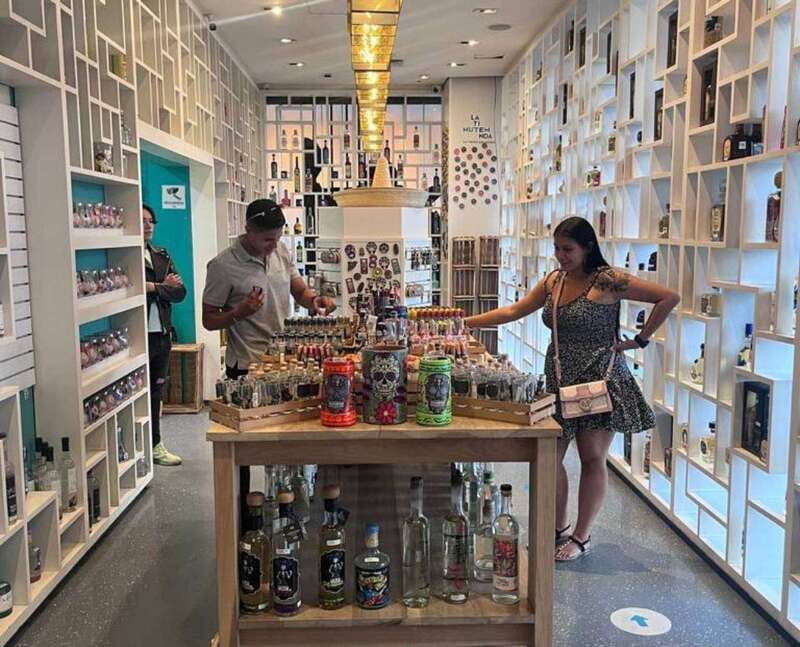
The museum’s biggest visual feature is its collection of more than 2,000 bottles. Some are traditional, while others are highly decorative or shaped to catch the eye. You may see bottles containing a scorpion, a snake, or the mezcal worm.
The bottles help explain how spirits are sold as cultural objects as well as drinks. Some displays tell you about the beverage itself, while others show how producers use design, folklore, and unusual ingredients to attract buyers.
This is where a guide makes a real difference. Without explanation, the museum can feel like a room full of bottles. With a guide, you can ask what you are seeing, how certain products are marketed, and which details matter when you shop for a bottle later.
A small gallery featuring local art connected with agave may also be part of the visit. The artistic displays add another angle to the subject, though the main focus remains the bottle collection and the production story.
From agave plant to finished spirit
The educational section covers the path from agave to tequila or mezcal. You learn about different types of agave and how the plant is processed into a drink.
The important lesson is that tequila and mezcal are not simply two brand names for the same thing. They involve different production traditions and can offer very different tastes. The guide also explains the terms used for tequila, including blanco and reposado.
A blanco is generally presented as a young, clear tequila style, while reposado refers to tequila that has spent time resting in wood. The tasting gives you a direct way to compare them. Instead of trying to remember a lecture, you can notice the difference in color, aroma, texture, and finish.
The mezcal portion introduces two wild mezcales. The word wild refers to agave that grows naturally rather than being produced only through planned cultivation. The point is not to memorize every agave variety in one visit. It is to understand why different plants and production methods can lead to different drinks.
One memorable detail raised during the tour is the use of smoked turkey in some mezcal traditions. You may also hear explanations about the worm, which belongs to mezcal lore rather than tequila. These details make the subject easier to remember, but your guide should also separate traditional stories from the basic facts of production.
More Mezcal Tours and Tastings in Mexico:
- Food & Mixology Tour:Tequila,Tacos, Mezcal and Agave Cocktails
★ 5.0 · 1,884 reviews - Hierve el Agua, Tule Tree, Mitla and Mezcal Distillery Tour
★ 4.5 · 1,094 reviews - Lucha Libre Tickets & Tacos & Beer & Mezcal – BEST NIGHT EVER!
★ 5.0 · 1,077 reviews - Explore Hierve el Agua, Mitla, Tule, Textile and Mezcal for a day
★ 5.0 · 1,043 reviews
The tasting: four pours with a purpose
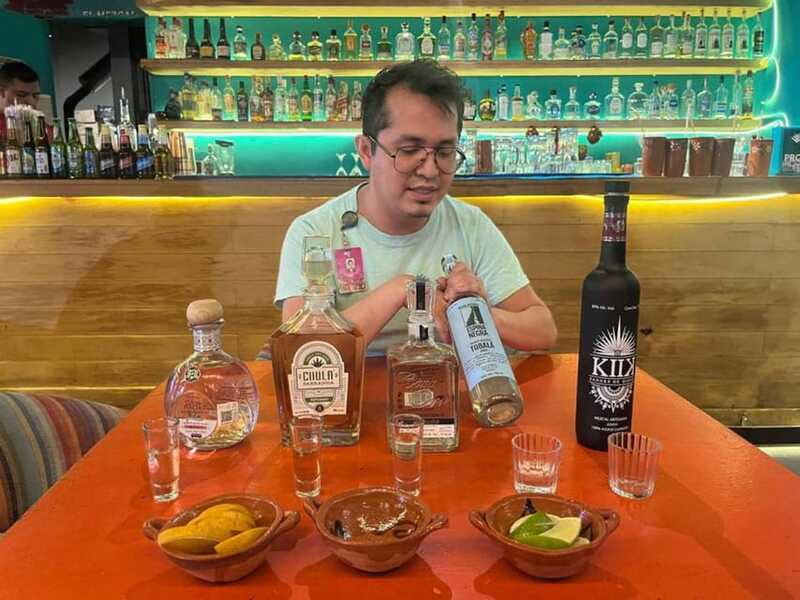
The listed tasting includes four samples:
- One tequila blanco
- One tequila reposado
- Two wild mezcales
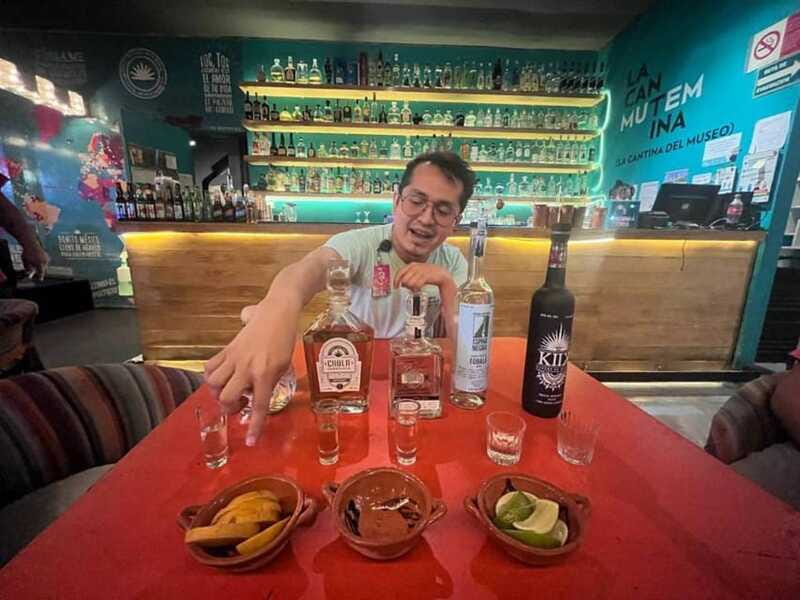
This is more useful than a single full-size drink because you can compare the samples side by side. The guide shows you how to approach each one and explains what to notice. You may discuss aroma, flavor, alcohol heat, smoke, sweetness, and the effect of additives or other ingredients.
The tequila comparison is the easiest place to start. A blanco and a reposado can show how aging changes a spirit. You are not just told that the drinks differ. You can taste the contrast for yourself.
The two mezcales broaden the lesson. Mezcal is not one uniform flavor. The samples may help you understand why some bottles appeal to people who like smoky spirits, while others may be fruitier, herbal, earthy, or more forceful.
The guide also explains how to read labels and how to make more informed choices when buying a bottle. That is one of the most useful takeaways for the rest of your trip. You might learn which words matter, how to spot affordable options, and how to ask for a style that matches your taste.
Some descriptions of the experience refer to five samples, but the stated inclusion lists four pours. If the exact number matters to you, confirm it when booking. The important point is that the formal tasting includes two tequilas and two mezcales.
This is still an alcohol tasting, not a full meal. Food and additional drinks are not included. Eat beforehand if you know that spirits affect you quickly, and remember that children may visit the museum but cannot drink during the tasting.
Why the small group size matters
With a maximum of five participants, the guide can keep the tasting conversational. You can ask why one mezcal tastes smoky, how reposado differs from blanco, or what to look for on a label.
That personal attention is especially useful for beginners. A large group can turn a tasting into a speech where you are afraid to interrupt. Here, you have a better chance to ask questions and receive advice based on your preferences.
The bilingual format is another advantage. The tour is offered in English or Spanish, so check the available starting time for your preferred language. Guides such as Ricardo, Maria, Victor, and Jorge have been praised for explaining the subject in an approachable way, but the exact guide depends on the date.
The small group also has a limit. If you prefer a quiet, self-directed museum visit, the guided format may feel more structured than necessary. The museum is compact, and you can see the collection quickly on your own. The guide is what turns the visit from a display of bottles into a useful lesson.
Time, cost, and what you really receive
The price is $40 per person, with a listed duration of about 1.5 hours. The itinerary also describes a 105-minute guided tour, so the timing information is slightly inconsistent. Check the available start time and allow enough room if you have another booking immediately afterward.
For the price, you are paying for three things: the bilingual guide, the museum tour, and the tasting. You are not paying for transport, a full meal, or an open bar.
I consider the value strongest if you are new to tequila and mezcal. The practical education can save you from buying a bottle based only on an attractive label or a familiar brand name. It also gives you a vocabulary for ordering drinks in Mexico City.
The value is less clear if you already know agave spirits well and want a large museum with extensive technical displays. This is a small museum, and the bottle collection is the main visual attraction. Its strength is the combination of exhibits, local context, and guided tasting.
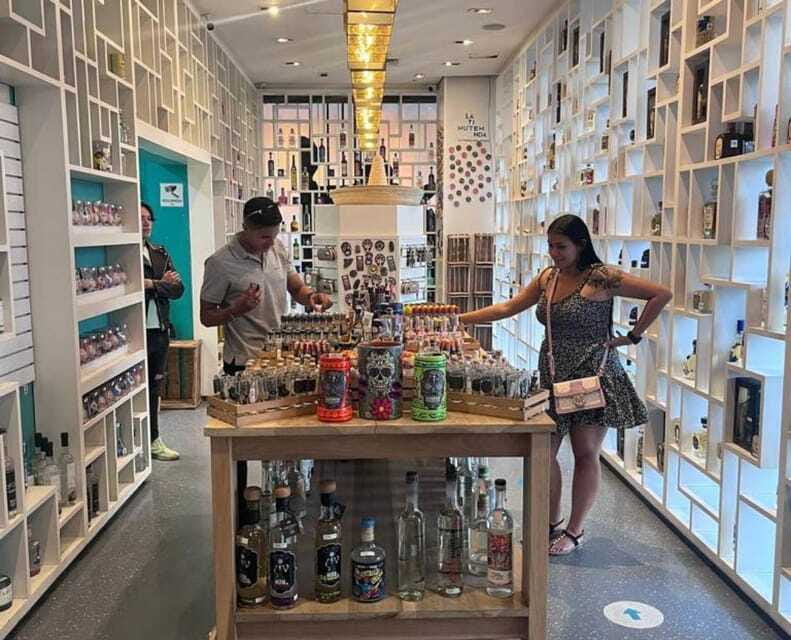
You can continue at the museum’s restaurant or cantina after the tour, but those food and drink purchases are extra. There is also a shop where you can look for bottles you tasted. The tour does not require you to buy anything, which is helpful if you prefer to decide later.
Making the most of Plaza Garibaldi afterward
The tour works well as an early or mid-evening activity. Afterward, you can spend time around the museum, visit the shop, or remain in the Plaza Garibaldi area.
Carry pesos if you want to pay mariachi musicians for a song or tip your guide. Neither is included in the $40 price. The plaza can add a lively public setting to what would otherwise be a short indoor museum visit.
Some people also pair the museum with food or a folkloric performance nearby. The museum does not include those extras, so treat them as separate plans rather than part of the booking.
If you are carrying a bottle home, remember that the shop is an opportunity, not a requirement. The tasting is designed to help you decide what you actually like before spending more money.
Who should book this tequila and mezcal tour
I would choose this experience if you want a short, focused introduction to Mexico’s agave spirits. It suits first-time visitors, casual drinkers, cocktail fans, and anyone who wants help choosing between tequila and mezcal.
It is also a good fit for a small group with different levels of interest. Beginners can learn the basics, while more experienced drinkers can ask about production, agave types, labeling, and flavor differences.
Families can visit because children are welcome in the museum, but only adults can take part in the alcohol tasting. Keep that restriction in mind if the entire group needs to participate together.
The tour is wheelchair accessible, and the small group limit makes it easier to stay with the guide. Transportation is not included, so you need to arrange your own way to the museum.
Free cancellation is available up to 24 hours before the activity for a full refund, and you can reserve now and pay later. Those options are useful if your Mexico City schedule is still changing.
Should you book it?
Book this tour if you want context, not just shots. The best parts are the guide’s explanations, the comparison of blanco, reposado, and mezcal, and the chance to connect the drinks with Plaza Garibaldi and mariachi culture.
Skip it if you want a large formal museum, a full meal, or a long distillery visit outside Mexico City. The museum is compact, and the experience depends heavily on the quality of the guide.
For most visitors, the $40 price is fair because the tasting is paired with practical instruction. I would especially recommend it near the start of a Mexico City stay. You can use what you learn afterward when ordering drinks, reading labels, and choosing a bottle to take home.
FAQ
Where does the Tequila and Mezcal Museum tour begin?
It begins at the Museo del Tequila y Mezcal in Plaza Garibaldi. Show your mobile voucher at the museum’s front desk.
How long does the activity last?
The listed duration is 1.5 hours. The itinerary also describes a 105-minute guided tour, so check the starting time and allow for the longer figure.
What spirits are included in the tasting?
The stated tasting includes one tequila blanco, one tequila reposado, and two wild mezcales.
Is the tour offered in English?
Yes. The live guide is available in English or Spanish. The specific guide depends on the date.
How large is the group?
The experience is limited to five participants, making it a small-group tour.
Can children attend?
Children are welcome in the museum, but they cannot drink alcohol during the tequila and mezcal tasting.
Is transportation included?
No. You are responsible for getting to the museum, and transportation is not included in the price.
Can I cancel the booking?
Yes. You can cancel up to 24 hours in advance for a full refund. You can also reserve now and pay later.
More Museum Visits in Mexico
- Mexico City: Tequila and Mezcal Museum Ticket with Tastings
★ 4.1 · 5 reviews
More Tequila Tastings in Mexico
- Cabo Beach Camel Ride, Mexican Buffet and Tequila Tasting
★ 5.0 · 8,815 reviews - Early morning Chichen Itza Tour: Cenote and Tequila Tasting
★ 5.0 · 6,657 reviews - 4×4 ATV Adventure with Tequila Tasting and Mexican Buffet Lunch
★ 5.0 · 5,177 reviews - Cancun ATV Jungle Adventure, Ziplines, Cenote and Tequila Tasting
★ 4.5 · 4,873 reviews
Newest agave reviews around Mexico
- Oaxaca: Mezcal Distillery Tour with Tastings★ 5.0 · 2 reviews
- Oaxaca: Legends Tour Mezcalbús★ 3.9 · 34 reviews
- Oaxaca: Mezcal Tasting Session with Expert★ 4.0 · 9 reviews
- Mezcal y Mole with a Sommelier CDMX★ 5.0 · 10 reviews
- Oaxaca: El Tule tree, Teotitlan Village & Mezcal Tour★ 5.0 · 12 reviews
- Oaxaca: Hierve el Agua & Mezcal Distillery Small-Group Tour★ 4.7 · 40 reviews
- Artisanal Mezcal & Fine Chocolate Tasting★ 5.0 · 8 reviews
- Mezcal y Mole with a Certified Sommelier★ 4.6 · 12 reviews
Mezcal Tours and Tastings, compared.
Food & Mixology Tour:Tequila,Tacos, Mezcal and Agave Cocktails
Read our review →
Hierve el Agua, Tule Tree, Mitla and Mezcal Distillery Tour
Read our review →
Lucha Libre Tickets & Tacos & Beer & Mezcal – BEST NIGHT EVER!
Read our review →
Explore Hierve el Agua, Mitla, Tule, Textile and Mezcal for a day
Read our review →
Lucha Libre Tour and Mezcal Tasting in Mexico City
Read our review →

Browse the lists this tour appears in