
Reviewed · MEZCAL TOURS AND TASTINGS
Mezcal Tour Oaxaca
The best part of this Oaxaca outing is that it treats mezcal as both a drink and a rural craft. You move from agave fields to a working distillery, then sit down for a serious tasting led by guides such as Antonio, who also serves as a mezcal maker and teacher.
I like the chance to see the full production process rather than simply sampling bottles in town. I also like the stop at a pulqueria, which adds an older, less polished side of Mexican drinking culture. The main drawback is simple: five hours of tasting, with up to 13 mezcals, can be a lot if you are not used to strong spirits. Eat first, pace yourself, and remember that food is not included.
Key points at a glance
- Up to 13 mezcals: Taste standard pours, pechuga styles, and unusual blends such as activated cannabis mezcal.
- Working production sites: See roasting, fermentation, and distillation methods explained by people tied to the craft.
- Agave in the field: Walk among the plants and learn about their life cycle, reproduction, and different uses.
- Pulque stop: Try traditional drinks at a pulqueria, including varieties locals may associate with home remedies.
- Strong English guidance: Antonio and Remy are singled out for clear explanations, patient answers, and a friendly manner.
- Useful half-day format: Round-trip transport and a five-hour schedule make this easier than arranging several rural visits yourself.
From Reforma 403 to Oaxaca’s mezcal country
The meeting point is at Reforma 403, with a stated 9:30am start. You do not need to knock on the door. Simply wait at the meeting place for the guide, who is expected to arrive on time.
This is a practical starting point because the tour includes round-trip transportation. You are not left to work out a bus, taxi, or rural transfer to Santiago Matatlán and Tlacolula de Matamoros. Those towns are central to Oaxaca’s mezcal production, so the drive takes you away from the city and toward the places where the spirit is made.
Eat a good-sized breakfast before setting out. That advice matters here. Food is not included, and the schedule centers on tastings rather than a meal. You may be able to buy bottles or products directly from the distillery, but you should not count on finding lunch as part of the activity.
The experience lasts five hours. That is long enough to cover fields, production, teaching, and tasting without taking your entire day. It also means you should plan the rest of your schedule with some breathing room, especially if you expect to spend time choosing bottles afterward.
More Mezcal Tours and Tastings in Oaxaca De Juarez:
- Oaxaca: Tule, Mitla & Hierve el Agua, & Mezcal Tour
★ 4.7 · 456 reviews - Check out Hierve el Agua, Mitla, the Tule Tree, Rugs, and a Mezcal Distillery Tour
★ 4.9 · 222 reviews - The Mezcal Journey
★ 4.9 · 78 reviews
Walking through the agave plantation
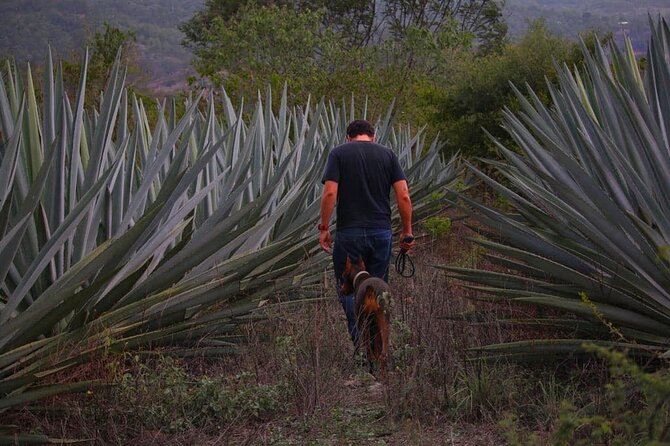
The agave plantation visit gives the tour its useful sense of place. Instead of treating mezcal as a mysterious spirit that appears in a glass, the guide shows you the plant behind it.
You learn about the agave life cycle and reproduction process, along with the different types used for mezcal. This helps explain why two pours can taste so different. The plant variety is one part of the result, while roasting, fermentation, distillation, and aging or blending can change it further.
The plantation is also where the pace slows down. You are outside, walking through the fields and hearing about the work that comes before the bottle. Wear closed shoes, since the tour includes a walk through agricultural ground rather than a simple paved viewpoint. Bare feet are not allowed, and the practical clothing advice is worth taking seriously.
One review describes an agave walk at sunset and a chilly evening, but you should not assume that every departure will have the same light or temperature. Bring a light jacket if your schedule may run late or conditions are cool. The plantation section is less about spectacle than understanding how much time and care goes into the raw material.
Seeing the mezcal process from plant to spirit

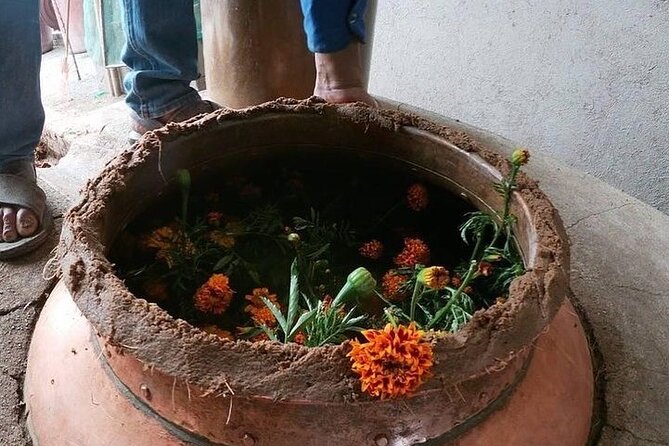
The distillery visit is the heart of the outing. You visit artisanal production sites in the Santiago Matatlán and Tlacolula de Matamoros area, where older methods remain in use.
The aim is to see the process rather than hear a sales pitch from behind a tasting counter. The tour covers the main stages of production, including fermentation and distillation. Guides explain how those steps affect aroma, strength, and flavor.
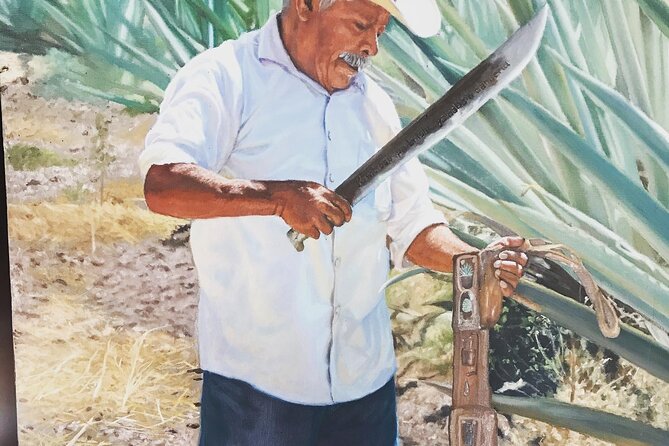
The teaching is tied to a mezcal maestro whose methods have been passed through five generations of mezcaleros. That family connection gives the explanation a human scale. You are not just learning a list of technical terms. You are hearing how a local craft is carried forward.
Antonio is praised for handling several roles at once: driver, guide, mezcal producer, and tasting leader. Remy is also noted for speaking excellent English and Spanish and for carefully explaining each stage at the palenque. The exact guide may vary, but the experience is designed around direct instruction rather than a self-guided visit.
You might see more than one production site. One account describes visiting two different distilleries, while the main description emphasizes artisanal distilleries in the region. That variety can be useful because it lets you compare methods and understand that mezcal is not made in one single style.
The setting is working and practical. Do not expect a museum display built only for tourists. That is part of the appeal, but it also means conditions may be basic, with walking and standing involved. Closed shoes are the sensible choice.
A tasting that goes well beyond one smoky pour
The tasting includes up to 13 mezcals. That is a generous range for a five-hour outing, and it gives you room to compare styles rather than make a snap judgment about the whole category.
You may try pechuga varieties, which are known for unusual production recipes, along with special blends made by the mezcal maestro. The experience also includes an activated cannabis mezcal. That does not mean you should treat every pour as a novelty shot. Listen to the guide, taste slowly, and ask questions about how each product is made.
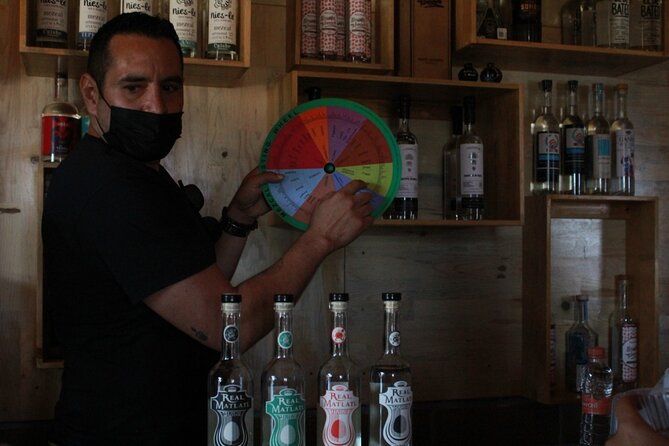
This is a good tour for people who enjoy identifying aromas and flavors. One useful feature is the explanation of how to appreciate mezcal, not just how to consume it. You can pay attention to differences among agave types, fermentation methods, distillation, and added ingredients.
The number of pours is also the biggest practical caution. Up to 13 tastes can add up quickly, even if each serving is small. If you are driving later, this is obviously a poor match. Since transportation is included, you can leave the driving to the guide, but you still need to pace yourself and know your own limits.
You may have the chance to buy directly from the distiller. That can be worthwhile because it connects your purchase to the production you have just seen. Still, do not feel that buying a bottle is required to make the tour worthwhile. The price covers transportation, instruction, and tasting, not a bottle or meal.
More Tequila Tours in Oaxaca De Juarez:
- Oaxaca: Monte Albán, Hierve el agua, Mezcal and Teotitlán
★ 4.9 · 48 reviews - Oaxaca: Mezcal Adventure
★ 4.5 · 44 reviews - Oaxaca: Legends Tour Mezcalbús
★ 3.9 · 34 reviews - Caminos del Condoy: Boiling water, Mitla. Mezcal
★ 4.3 · 32 reviews
The pulqueria adds another side of Mexican drinking culture
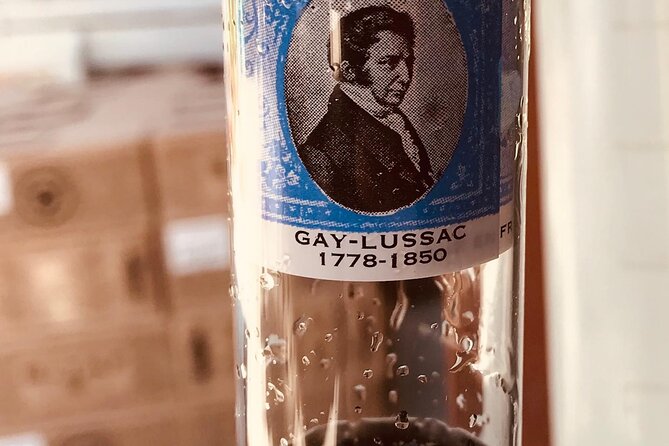
The pulqueria visit is a welcome change from a standard distillery route. Pulque is a separate traditional drink, and the stop gives you a chance to try different preparations in a more local setting.
The stop is described as a place where locals may use certain drinks as medicine. That is cultural context, not medical advice, so treat the claims as part of local tradition rather than a health benefit. The value of the visit is that it broadens the story beyond commercial mezcal.
For me, this is the kind of addition that helps the half-day feel less like a bottle-shopping trip. You see another drink, another set of customs, and another way alcohol fits into community life. It also breaks up the production explanation and the main tasting.
The pulqueria is not the central focus, so you should book this for the mezcal education first. Consider the pulque stop an extra layer rather than the reason to choose the experience.
Why the $102 price can make sense
At $102 per person, this is not the cheapest way to taste mezcal in Oaxaca City. You can certainly find a bar tasting for less. The comparison changes when you count what is included here: round-trip transport, an agave plantation visit, access to production sites, an in-depth explanation, a pulqueria stop, and a large tasting lineup.
You are paying for access and context as much as for alcohol. A city tasting may explain flavor, but it usually cannot show you the fields and production setting in the same afternoon. If you are curious about how mezcal is made, the added transport and rural visits help justify the cost.
The value is strongest for someone who wants a guided introduction rather than a quick sample. The guide’s role matters. Antonio is described as having a long personal connection to mezcal, while Remy is praised for patient explanations in both English and Spanish. The exact guide is not guaranteed, but the format depends on this kind of personal instruction.
The value is weaker if you dislike strong spirits, do not want to buy anything at a distillery, or mainly want a scenic countryside drive. This is an educational tasting with alcohol at its center, not a general sightseeing tour.
Who will enjoy this five-hour outing
I would choose this tour if you are interested in the process behind a drink and want to meet the people who make it. It suits adults who enjoy asking questions, comparing flavors, and learning why production choices matter.
It is also a good fit if you are staying in Oaxaca City without a rental car. The included transport removes much of the planning involved in reaching the mezcal towns.
This is not suitable for children under 18. It is also a poor choice if you need a full meal during the activity, since food is not included. Wear closed shoes, eat beforehand, and bring a jacket if the day may turn cool.
You should be comfortable with a mixture of walking, standing, rural visits, and tasting. The tour rules specifically exclude bikes, climbing, diving, and bare feet, though those restrictions are unlikely to affect most people booking a distillery visit.
Simple booking details that matter
The tour is offered in English and starts at the Reforma 403 meeting point at 9:30am according to the provided schedule. Check the date for the exact available start time, since the general activity information says times can vary.
Cancellation is flexible up to 24 hours before the activity for a full refund. You can also reserve now and pay later, which helps if your Oaxaca plans are still shifting.
The meeting point is only a pickup location. Do not knock on the door. Arrive ready to meet the guide outside, and allow enough time to eat breakfast before departure.
Should you book the Mezcal Tour Oaxaca?
Book it if you want to understand mezcal from agave plant to tasting glass, not simply sample a few pours in town. The plantation, working distillery visits, family production knowledge, pulque stop, and broad tasting make this a fuller experience than a bar-based introduction.
I would be especially inclined to book if Antonio or Remy is listed for your date, since both are described as clear and engaged teachers. Still, the main strengths are built into the route itself.
Skip it if you do not drink alcohol, need lunch included, or prefer a short and gentle tasting. For everyone else, $102 is a fair price for a five-hour outing that combines transport, regional context, hands-on production explanation, and one of Oaxaca’s most distinctive local drinks.
FAQ
Where does the mezcal tour start?
The meeting point is Reforma 403 in Oaxaca, with a stated start time of 9:30am. You do not need to knock on the door. Wait at the meeting point for the guide.
How long does the tour last?
The activity lasts five hours. Check availability for the exact starting time on your chosen date.
Is transportation included?
Yes. Round-trip transportation is included, taking you from the meeting point to the mezcal production area and back.
How many mezcals will I taste?
You can taste up to 13 different mezcals. The selection may include pechuga varieties, activated cannabis mezcal, and other blends made by the mezcal maestro.
Is food included?
No. Food is not included, so eat a good-sized breakfast before the tour. You may have the option to buy directly from the distillery.
Can children join the activity?
No. The tour is not suitable for children under 18.
Newest agave reviews around Oaxaca De Juarez
- Oaxaca: Mezcal Distillery Tour with Tastings★ 5.0 · 2 reviews
- Oaxaca: Legends Tour Mezcalbús★ 3.9 · 34 reviews
- Oaxaca: Mezcal Tasting Session with Expert★ 4.0 · 9 reviews
- Oaxaca: El Tule tree, Teotitlan Village & Mezcal Tour★ 5.0 · 12 reviews
- Mezcal y Mole with a Certified Sommelier★ 4.6 · 12 reviews
- Hierve el Agua, Mitla, Tule, Teotilán and Mezcal factory★ 3.2 · 6 reviews
- From Oaxaca: City, Mitla, and Mezcal Factory Tour★ 4.4 · 21 reviews
- Caminos del Condoy: Boiling water, Mitla. Mezcal★ 4.3 · 32 reviews
Mezcal Tours and Tastings, compared.
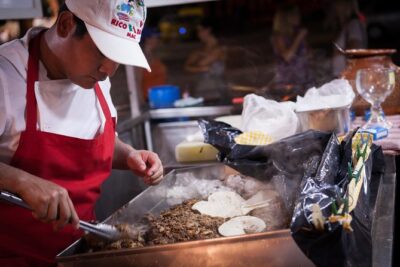
Food & Mixology Tour:Tequila,Tacos, Mezcal and Agave Cocktails
Read our review →
Hierve el Agua, Tule Tree, Mitla and Mezcal Distillery Tour
Read our review →
Lucha Libre Tickets & Tacos & Beer & Mezcal – BEST NIGHT EVER!
Read our review →
Explore Hierve el Agua, Mitla, Tule, Textile and Mezcal for a day
Read our review →

Lucha Libre Tour and Mezcal Tasting in Mexico City
Read our review →
Browse the lists this tour appears in